Why Your Philadelphia Business Needs Professional Commercial Rekeying Services
@commercialrekeyingservicesview
When Keys Become a Liability
A few years back I got a call from a small medical practice in Center City. The office manager had just fired a technician who had been with them for three years. The technician had keys to every exam room, the medication storage closet, and the side entrance used after hours. The manager asked if she could just collect the keys at the exit interview and move on. I told her that was a start, but it wasn't enough. Copies could have been made months ago. A disgruntled ex-employee with access to a key duplication machine could walk back in at any hour. That practice needed a full rekey, and they needed it done before the weekend. That is the kind of call I get weekly in Philadelphia. It is also the reason so many local businesses now rely on commercial rekeying services to protect what matters most.
The truth is, keys are a weak link in a lot of security chains. They get lost, copied without permission, or left in the wrong hands after a personnel change. A master key system that worked perfectly for five years can become a nightmare the moment you realize you no longer know who holds every duplicate. That is where rekeying becomes not just a convenience but a necessity.
What Rekeying Actually Means
Rekeying is not the same as changing locks. When I rekey a lock, I change the internal pin configuration so the old key no longer works, while the lock cylinder itself stays in place. A new key is cut to match the new configuration. This is faster and more cost-effective than replacing every lock, especially in a commercial building with dozens of doors. It also lets you maintain the same hardware, which matters when you have invested in high-security cylinders from brands like Medeco or Mul-T-Lock, or in electronic access control system components that integrate with mechanical locks.
For a business, commercial rekeying services usually involve more than just one door. You might need to rekey an entire floor, a warehouse, or a multi-tenant office building. The goal is to restore control without tearing out hardware that still works fine. I have done jobs where we rekeyed forty doors in a single afternoon, using Schlage and Kwikset cylinders that matched the existing trim. The business was back to normal by the next morning.
When Should You Rekey?
There are obvious moments. After an employee departure, especially a termination. After a lost key ring that had access to sensitive areas. After a break-in where the lock was picked or the key was compromised. But there are also quieter reasons. Maybe your business has grown, and the old master key system no longer reflects who should go where. Maybe you have a vendor who was given a key for a one-time project and never returned it. Or maybe you just inherited a building and have no idea how many copies of the old keys exist.
I worked with a property management company in South Philly that had been using the same key system for over a decade. They had no record of how many keys were cut or who held them. One of their maintenance staff had left the company two years earlier, and no one had bothered to rekey. That is a security gap you can drive a truck through. We ended up rekeying the entire building and setting up a proper key control log so they could track every key issued from that point on.
The Difference Between Residential and Commercial Rekeying
A lot of people think rekeying a business is just a scaled-up version of rekeying a house. It is not. Commercial locks are built to higher standards. They see more cycles per day, take more abuse, and often incorporate features like ANSI Grade 1 certification for heavy-duty use. A residential deadbolt from a big-box store might work fine for a front door that gets used a dozen times a day. But a commercial door closer on a busy retail entrance can wear out a cheap lock in months. That is why we reach for brands like Yale, Abus, or Master Lock when we specify commercial hardware. They are built to last.
Commercial rekeying services also have to account for more complex access hierarchies. You might want the cleaning crew to have keys only to the common areas and restrooms, while managers can access the office and storage rooms, and only the owner has a key to the safe room or server closet. That kind of tiered access requires a properly designed master key system, not just a handful of identical keys. I have set up systems where a single master key opens every lock in the building, while individual keys only open their designated doors. It sounds simple, but it takes careful planning and the right cylinders.
Hardware Choices Matter
Not all locks are created equal, and not all locks can be rekeyed the same way. Some brands, like Schlage and Kwikset, offer interchangeable cores that make rekeying fast and clean. Others, like Medeco and Mul-T-Lock, use patented keyways that are much harder to pick or duplicate without authorization. Those high-security cylinders cost more upfront, but they give you better protection and tighter key control. If you are a business that stores valuable inventory or sensitive data, that extra layer is worth it.
I have also worked with Lockey brand locks for small storage rooms and cabinets. They are not the flashiest brand, but they are reliable and affordable for less critical doors. For exterior entrances, I tend to recommend Grade 1 hardware from Yale or Abus. They hold up to weather and heavy use. And for businesses that want a mechanical lock that can integrate with an electronic access control system, there are options from Schlage and others that bridge the gap. The point is, the hardware you choose affects how easy future rekeying will be. It pays to think ahead.
Key Control and Master Key Systems
Rekeying is only part of the picture. If you do not have a system for tracking who has which keys, you will end up right back where you started. That is where key control comes in. A simple logbook or a digital spreadsheet can tell you who was issued key number 14 and when. But for larger operations, I recommend a more formal master key system with restricted key blanks that can only be duplicated by an authorized locksmith. Ilco blanks are common for standard systems, but for higher security, we use Medeco or Mul-T-Lock blanks that require a special card to order duplicates.
I have seen businesses save thousands of dollars just by implementing a decent key control policy. One warehouse in Northeast Philadelphia had been rekeying every time a key went missing, because they had no idea who had taken it. After we set up a master key system with a sign-out log, they went from rekeying four times a year to once every two years. The savings on hardware and labor more than paid for the initial setup.
What a Professional Rekeying Job Looks Like
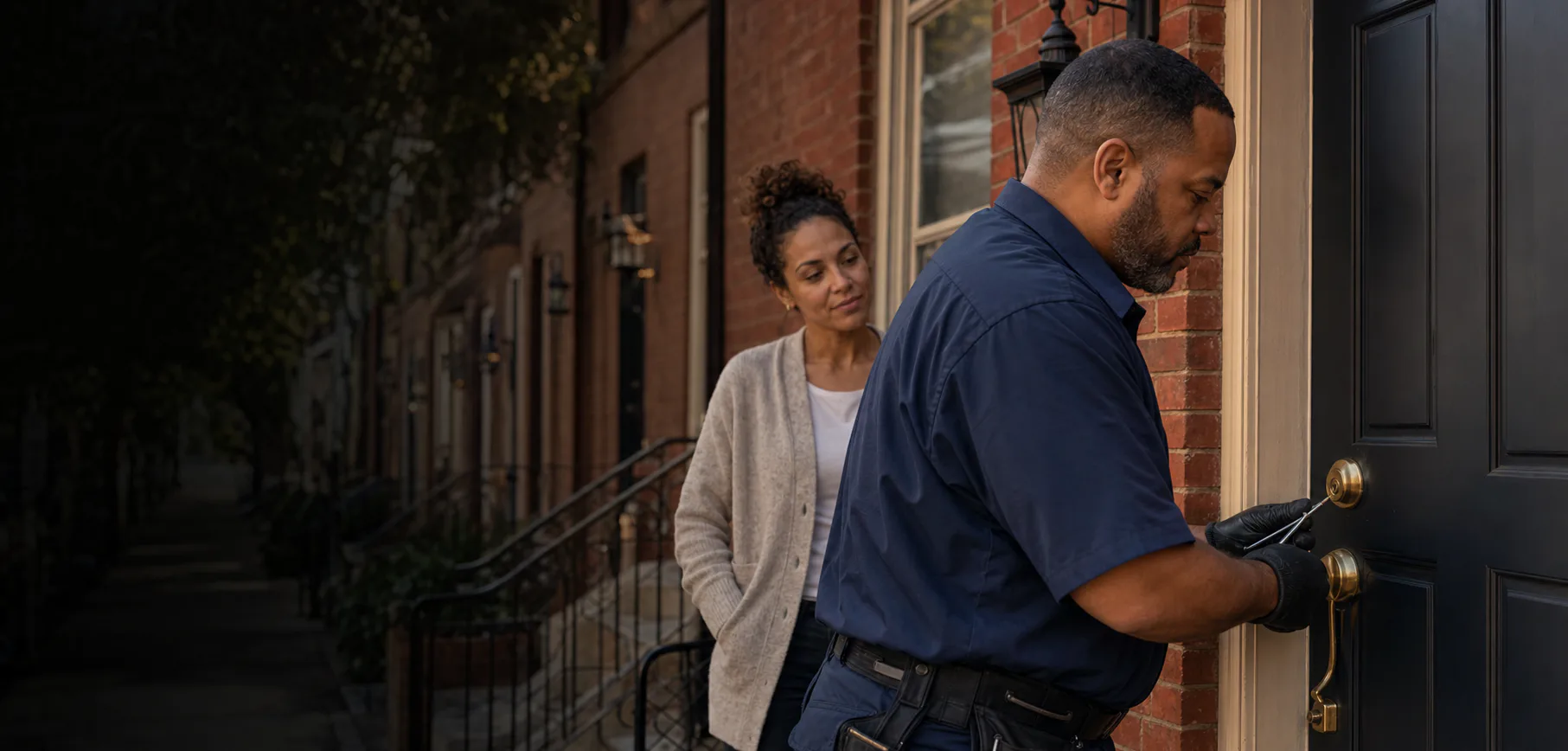
When I arrive for a commercial rekeying job, the first thing I do is assess every lock that needs to be changed. I check the cylinder type, the condition of the lock body, and whether the door closer or other hardware will interfere. Then I remove each cylinder, disassemble it, and replace the pins and springs to match the new key code. I cut new keys on a key duplication machine, test every lock, and hand over a set of change keys plus a new master key. The whole process is precise and methodical. It is not glamorous, but it is the difference between a secure building and one that is wide open.
I also label every key and cylinder with a code that matches the building's key control record. That way, if you need an extra key six months later, you can call me and I will know exactly which blank to cut. No guessing, no trial and error.
Choosing a Locksmith for Commercial Work
Not every locksmith is set up for commercial rekeying services. Residential work is simpler and faster. Commercial jobs require knowledge of different lock standards, larger inventories of cylinders and blanks, and the ability to work around business hours without disrupting operations. I am a member of the Philadelphia Locksmith Association, and I see a lot of local locksmiths who focus mainly on house calls and car lockouts. That is fine, but for a commercial job, you want someone who carries stock from brands like Schlage, Medeco, and Mul-T-Lock, and who understands master key system design.
I also work with LockNet Hardware for some larger orders. They supply commercial-grade cylinders and accessories that are not always available at a local hardware store. Having a reliable supply chain means I can finish a rekeying job in one visit, not three. That matters when a business cannot afford to have doors offline for days.
The Real Cost of Waiting
I understand that rekeying feels like an expense you can put off. But every day you wait, the risk grows. A lost key could be in the hands of someone who knows where your business is and what is inside. A former employee with a grudge might still have access. Even if nothing happens, the uncertainty alone can weigh on you. I have seen business owners lose sleep over a missing key. Commercial rekeying services are not just about hardware. They are about peace of mind.
If you are in Philadelphia and you suspect your key security has gaps, call a locksmith who knows commercial work. Get the building rekeyed, set up a master key system, and start keeping a real key control log. It is one of the simplest, most effective security upgrades you can make. And unlike an alarm system or a camera, it does not require batteries or a monthly subscription. It just works.